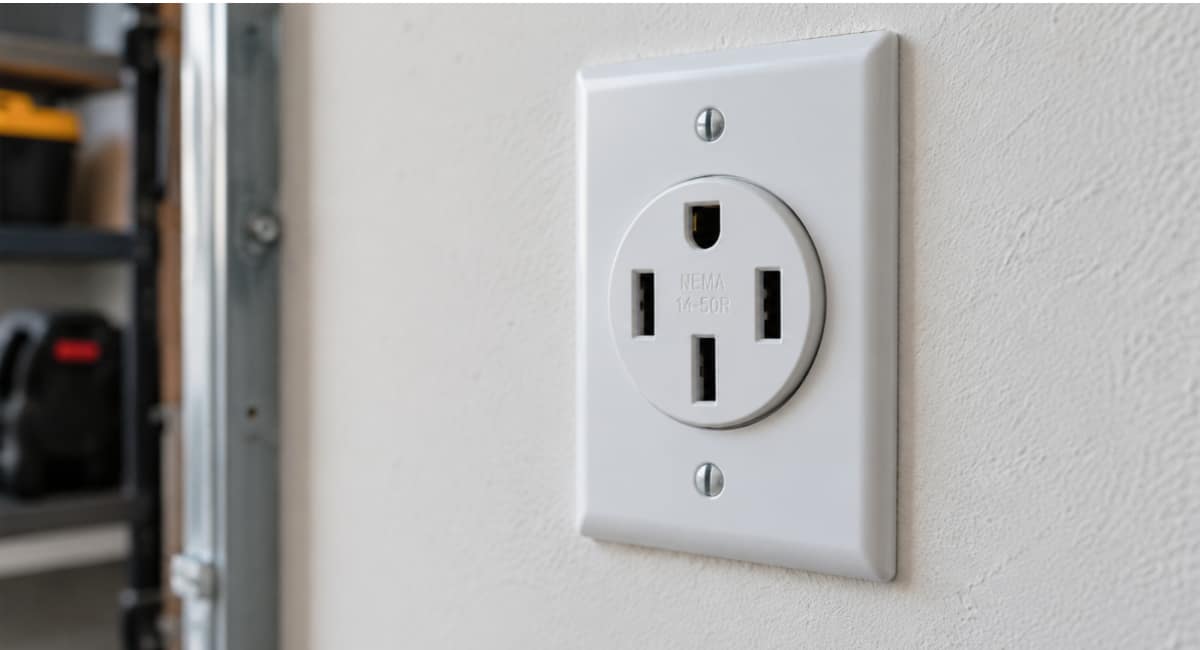
: NEMA 14-50 is a 4-prong, 50-amp, 125/250-volt outlet used for EV chargers, RVs and ranges. Learn wiring, wire size, safety and common mistakes.
NEMA 14-50 is a four-prong electrical outlet and plug rated for 50 amps and 125/250 volts. It has two “hot” wires, one neutral wire and one ground wire. People in North America use it for electric ranges, 50-amp RVs, generators and, more and more, electric vehicle (EV) chargers.
If you saw this name on an EV charger box, an RV pedestal or an electrician’s quote, this guide explains what it means in plain words.
What Does “NEMA 14-50” Mean?
NEMA stands for the National Electrical Manufacturers Association. It is the group that sets standards for plugs and outlets in North America.
The name has two parts. A simple way to read it:
- 14 is the wiring layout. It tells you the outlet has two hots, a neutral and a ground, and that it supports both 125 and 250 volts.
- 50 is the amp rating. This outlet is built for up to 50 amps.
You will also see a letter at the end. 14-50R is the outlet (the “receptacle”) on the wall. 14-50P is the plug on the cord.
NEMA 14-50 at a Glance
| Feature | NEMA 14-50 |
| Voltage | 125/250 V |
| Amp rating | 50 A |
| Prongs | 4 |
| Wires | 2 hot, 1 neutral, 1 ground |
| Maximum power on paper | 12,000 watts (240 V × 50 A) |
| Typical EV charging limit | 40 A, about 9.6 kW |
Is NEMA 14-50 120V or 240V?
It gives you both. Each hot wire carries about 120 volts to the neutral. Together, the two hot wires give you 240 volts. Big loads like an EV charger or an electric oven use the full 240 volts. Smaller parts inside an RV can use 120 volts from one hot wire and the neutral.
You may find web pages calling this outlet “three-phase.” For normal homes, garages and RV parks, that is not correct. It is a single-phase outlet with two hots.
Where Is NEMA 14-50 Used?
- Electric ranges and ovens. This is its traditional home use.
- RVs. Campground power pedestals and many home RV hookups use 50-amp service.
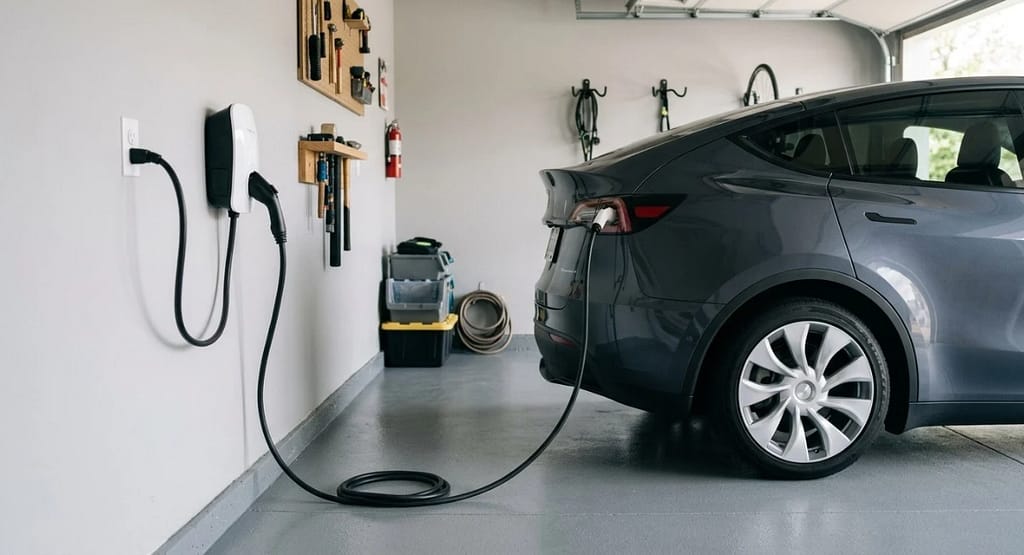
- EV charging. One EV charger maker calls it the most popular option for residential EV charging, and most portable chargers are built around it.
- Generators and mobile homes. It is a common connection for both.
NEMA 14-50 vs 14-30 vs 6-50
These outlets look similar, so people mix them up.
- NEMA 14-30 is the four-prong dryer outlet. It is rated for 30 amps. The visible difference is the neutral pin, which is L-shaped on a 14-30 and straight like the others on a 14-50.
- NEMA 6-50 has three prongs: two hots and a ground, with no neutral. It is often used for welders and air compressors. It works for many EV chargers, because chargers usually only need the two hots and the ground.
The neutral wire is the real difference. An EV charger does not need it, but an RV does. That is why a 6-50 outlet with an adapter can charge a car, but it is not a safe way to power an RV. A welder outlet has no neutral, and an RV needs that path back to the panel.
How Much Power Can a NEMA 14-50 Deliver?
On paper, 50 amps at 240 volts is 12,000 watts. In real life, EV charging counts as a “continuous load” under the National Electrical Code. For continuous loads, you plan for 80% of the circuit rating. That is 40 amps, or about 9.6 kW. Most plug-in EV chargers stop at 40 amps for this reason.
What Wire Size and Breaker Does a NEMA 14-50 Need?
The common setup is:
- A 50-amp double-pole breaker in the panel
- 6 AWG copper wire (or 4 AWG aluminum), with a neutral and a ground
- A NEMA 14-50R outlet
Cable for this circuit is often sold as 6/3 with ground. Some EV charger makers ask for copper only, so check the manual before you buy.
Long runs need extra care. One wiring guide suggests that 6 AWG copper works up to roughly 80 to 85 feet before voltage drop becomes a concern. For longer runs, your electrician may suggest thicker wire.
You may read forum posts about using 8 AWG wire on short runs. Whether that is allowed depends on the wire’s insulation rating and your local code. That is a decision for a licensed electrician, not for guessing.
How Much Does a NEMA 14-50 Installation Cost?
The outlet itself is cheap. One guide puts a 14-50 receptacle at about $12 to $25 and a breaker at about $50 to $90. The cost that matters is labor, wire length and panel work. One EV charger retailer estimates a full 14-50 installation at roughly $500 to $2,500. Get a written quote, because a long run from the panel to the garage can change the price a lot.
Common Mistakes With NEMA 14-50 Outlets
- Wire and breaker that do not match. A 50-amp breaker on thin wire can overheat the wire before the breaker trips.
- Loose terminal screws. High-amp outlets get warm when a connection is loose. If a plug or outlet feels hot, stop using it and have it checked.
- Cheap adapters. Adapters that change the plug shape do not change the wiring behind the wall. A wrong adapter can leave out the neutral or the ground.
- Mixing up 14-30 and 14-50. They look alike but are rated for different loads.
- Using a thin extension cord. A 50-amp load needs a cord built for 50 amps.
A quick check before buying a charger or RV adapter: read the plug name on the product, then look at the outlet on your wall. If they do not match exactly, do not force it.
Do You Need an Electrician?
Yes, for a new circuit. Installing a 14-50 outlet means working inside your panel, and local rules differ. Some areas ask for permits, and newer code editions may ask for GFCI protection on certain outlets. A licensed electrician will know what your area requires.
FAQs
Is NEMA 14-50 the same as a dryer outlet?
No. A dryer outlet is usually NEMA 14-30, rated for 30 amps. The 14-50 is rated for 50 amps and is usually used for ranges, RVs and EV chargers.
How many watts can a NEMA 14-50 handle?
On paper, up to 12,000 watts. For continuous use, such as EV charging, plan for about 9.6 kW at 40 amps.
Can I charge an electric car from a NEMA 14-50 outlet?
Yes. It is one of the most common home outlets for Level 2 charging, and many portable chargers use a 14-50 plug.
Can I plug my RV into a NEMA 14-50 outlet?
A 50-amp RV uses this type of connection. A 30-amp RV plug will not fit, so you would need an adapter made for that job, and you would still only get 30 amps.
What is the difference between NEMA 14-50 and 6-50?
The 14-50 has a neutral wire and four prongs. The 6-50 has no neutral and three prongs.
Can I install a NEMA 14-50 outlet myself?
Working in the panel is risky, and rules vary by location. Hire a licensed electrician.
The Short Version
NEMA 14-50 is a four-prong, 50-amp outlet that supplies both 120 and 240 volts. Check the plug name on your equipment, use the right wire and breaker, and avoid cheap adapters. When in doubt, ask an electrician before you plug in.
About the Author