A hot water heater preventive maintenance checklist is a short list of checks you repeat on a schedule to keep your heater safe and working well. In simple terms: look for leaks and rust every month, then flush the tank, test the relief valve and inspect the anode rod once a year. Most of this takes less than an hour and needs only a bucket, a garden hose and basic tools.
This guide covers tank heaters (gas and electric) and gives short notes for tankless models. Always read your heater’s manual first, because the maker’s instructions come before any general advice.
Quick Checklist: What to Do and How Often
| How often | What to check |
| Every month | Look for leaks, rust or a wet floor. Listen for popping or rumbling. Make sure nothing is stored against the heater or blocking the vent. |
| Every 6 months | Check the hot water temperature. Look at the relief valve discharge pipe. Flush the tank now if you have hard water. |
| Once a year | Test the relief valve. Flush the tank. Inspect the anode rod. Check pipe insulation and venting. |
| Every few years | Have a plumber look it over. Replace a worn anode rod or a weak relief valve. |
Before You Start: Safety First
Hot water can scald you, and gas and electricity add their own risks. Keep these rules in mind:
- Wear gloves and safety glasses.
- Turn off the power at the breaker (electric) or set the gas control to “pilot” or “off” (gas). Check your manual for the exact steps.
- If you smell gas, leave the house and call your gas company. Do not touch switches.
- If a task feels beyond you, call a licensed plumber. Gas lines and wiring are not good places to learn by trial and error.
Monthly Checks (5 Minutes)
These are quick and need no tools.
- Look around the base. Water on the floor, a rusty tank or damp walls are early warnings.
- Check the pipes and fittings. Small drips often start at the connections.
- Listen while it heats. Popping or rumbling usually means sediment (mineral grit) at the bottom of the tank.
- Keep the area clear. Gas heaters need fresh air and a clear vent. Do not store paint, cleaners or cardboard near the heater.
- Gas heaters only: if you can see the burner flame, it should be steady and blue. ServiceChannel’s guide also advises checking the vent and flue for debris and corrosion. servicechannel
How to Test the Temperature and Pressure Relief Valve
The temperature and pressure (T&P) relief valve is the safety valve on the side or top of the tank. It opens to let out water if the pressure or heat gets too high. The pressure setting is typically 150 psi. searshomeservices
Testing frequency varies by source. HomeServe suggests once or twice a year, while MetLife suggests every two to three years. Once a year is a sensible middle ground unless your manual says otherwise. homeservemetlife
- Place a bucket under the discharge pipe, the pipe that runs down from the valve.
- Lift the small lever for a few seconds. Hot water should flow out. Keep your hands and face clear, because that water can scald.
- Let the lever snap back and watch that the dripping stops.
What the result means:
- No water, only a trickle, or a lever that won’t lift: the valve may be stuck or failed. Don’t force it. Replace it or call a plumber.
- Drips right after the test: operating the lever a few times can clear small debris that stops the valve from seating. dummies
- Drips on its own, without testing: this can point to high water pressure or an overheating tank. One guide puts high pressure at above roughly 80 psi. A plumber can measure it with a pressure gauge. hometips
A quick look at the discharge pipe is worth doing too. It should match the valve outlet size, usually 3/4 inch, and should not run uphill and then downhill, where water can get trapped. Never cap or plug it. dummies
How to Flush a Water Heater Tank
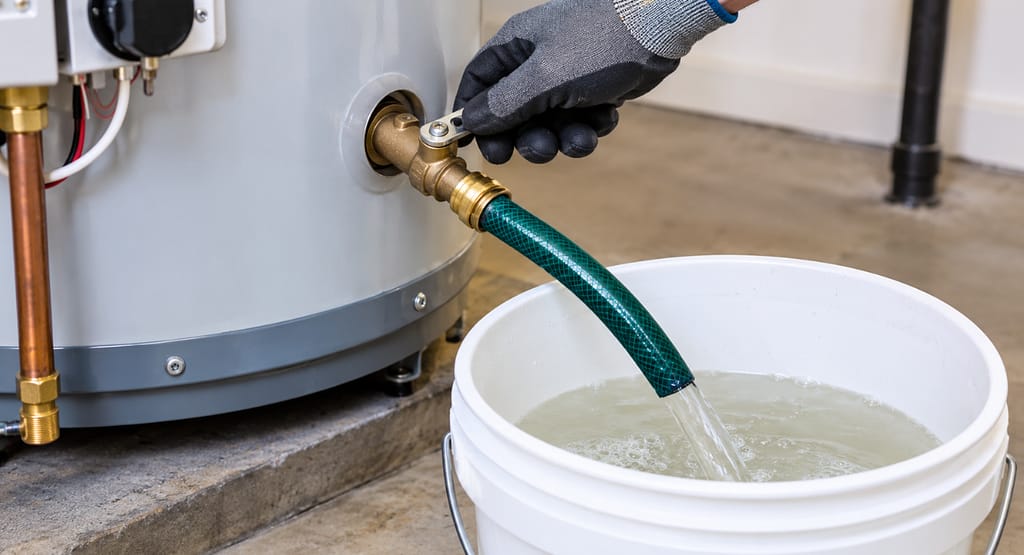
Flushing removes sediment, the minerals that settle at the bottom of the tank. Left alone, it can make the heater noisy and less efficient and can speed up corrosion. Many guides suggest flushing once a year, and twice a year if possible. If your water is hard, lean toward twice. lumiformapp
- Turn off the power or gas. If you can, do this several hours earlier so the water cools down.
- Close the cold-water supply valve on the pipe at the top of the heater.
- Connect a garden hose to the drain valve near the bottom. Run the other end to a floor drain, a bucket or outside.
- Open a hot tap somewhere in the house. This lets air in so the tank drains properly.
- Open the drain valve and let the tank empty. Cloudy, gritty or rusty water tells you what has been building up.
- Rinse. Briefly open the cold supply to stir up the bottom, and drain until the water runs clear.
- Close the drain valve and remove the hose. Then open the cold supply and let the tank refill. Keep the hot tap open until water flows smoothly without sputtering.
- Only then restore power or gas.
Common mistakes to avoid:
- Turning an electric heater back on before the tank is full. The heating elements can burn out if they run without water around them.
- Forgetting to open a hot tap, which makes the tank drain slowly or not at all.
- Flushing a heater that has never been flushed in many years without being ready for trouble. The drain valve can clog with sediment or drip afterward. If water barely comes out, stop and call a plumber.
How to Check the Anode Rod
Inside most tanks is a metal rod, usually magnesium or aluminum. It is called a sacrificial anode because it corrodes first so the tank steel does not. MetLife recommends inspecting it every year. metlife
To check it, turn off the power or gas, close the cold supply and drain a few gallons. Then loosen the hex head on top of the heater with a socket wrench and slowly pull the rod up.
Replace it if it is badly eaten away, coated with mineral buildup or showing bare core wire. One utility guide suggests replacing it once it is thinner than about half an inch. Soft water can use up an anode faster than you might expect, so check it more often in that case. If the rod is stuck or there is little space above the heater, flexible anode rods exist, or a plumber can do it. davidcityne
What Temperature Should a Water Heater Be Set To?
The U.S. Department of Energy recommends 120°F (about 49°C), while many heaters leave the factory set to 140°F, according to a Nebraska Public Power District guide. The lower setting reduces scald risk and slows mineral buildup. The same guide says each 10-degree drop can cut water heating energy use by up to about 5%. davidcitynedavidcityne
A simple way to check is to run the tap closest to the heater until it is hot, then measure with a kitchen thermometer. If you live with someone who has a weakened immune system, or you manage a larger building, check local health guidance before turning the temperature down.
Extra Checks for Gas and Electric Heaters
Gas heaters
- Keep the vent and flue clear and free of rust.
- Check that the burner flame is steady and blue.
- Make sure the room has fresh air. A carbon monoxide alarm nearby is a smart add-on.
Electric heaters
- Check that wiring and covers look intact and not burnt or loose.
- Have an electrician or plumber test thermostats and elements if the water is lukewarm or runs out fast.
Both types: check the insulation on exposed hot pipes. A tank blanket can help on older, uninsulated heaters, but keep it clear of the relief valve, controls, burner area and any air intake, and check the manual first.
Tankless Water Heater Maintenance
Tankless heaters have no tank to flush, but they still need care.
- Descale the heat exchanger. One guide describes circulating food-grade white vinegar through the unit for about 45 minutes, while others say to use a manufacturer-approved solution. Follow your manual. lumiformappcoastapp
- Clean the inlet water filter to keep flow strong.
- Check vent pipes and error codes. Repeated codes mean it is time for a technician.
Signs Your Water Heater Needs a Professional
Call a plumber or technician if you notice:
- A gas smell (leave first, call from outside)
- Water pooling under the tank or a constantly dripping relief valve
- No hot water, or a pilot light that won’t stay lit
- Rusty hot water, a rotten-egg smell or loud banging
- Corrosion or bulging on the tank body
Age matters too. One guide gives a typical lifespan of 8 to 13 years, while the Department of Energy estimate cited by Nebraska Public Power District is around 15 years for storage tank heaters. If yours is past 10 years and leaking, replacing it is usually safer than repairing it. lumiformappdavidcityne
The Short Version
Most of this checklist comes down to four habits: look for leaks monthly, flush the tank yearly, test the relief valve, and check the anode rod. Add a sensible temperature setting, and you cover the things that most often shorten a heater’s life. Keep a simple log with dates and findings so you notice changes over time.
FAQs
How often should a hot water heater be serviced?
Most guides recommend a basic service once a year: flush the tank, test the relief valve and inspect the anode rod. Do quick visual checks monthly. If your water is hard, flush twice a year.
Do I need to turn off the power before draining the tank?
Yes. Turn off the breaker for electric heaters, or set the gas control to pilot or off. For electric models, also keep the power off until the tank is completely full again.
What happens if I never flush my water heater?
Sediment builds up at the bottom. You may hear popping, get less hot water and see higher energy use, and the tank can corrode faster.
Can I do water heater maintenance myself?
Visual checks, flushing and testing the relief valve are common DIY jobs if you follow safety steps. Leave gas connections, wiring and valve replacement to a professional if you are unsure.
How long does a water heater last?
Sources give different ranges, roughly 8 to 15 years for tank heaters, depending on water quality and care.
Is tankless maintenance different?
Yes. There is no tank to flush, but you need to descale the unit, clean the inlet filter and check the vents.
About the Author