A drain cleaning specialist is a trained professional who finds and removes blockages in the pipes that carry water out of your home. They use tools like cables, high-pressure water jets and small cameras. You usually need one when a clog keeps coming back, when more than one drain is slow, or when sewage smells appear.
This guide explains what these specialists actually do, how their methods differ, what the work may cost, and how to pick someone reliable.
What Does a Drain Cleaning Specialist Do?
Their main job is to clear a blocked pipe and work out why it blocked. A good specialist does not just push the clog down the line. They check where it started and whether it will return.
A typical visit includes:
- Finding where the blockage is (a single sink, or the main line)
- Clearing it with the right tool
- Checking the pipe afterwards, sometimes with a camera
- Telling you what caused it and how to avoid it
Common blockage causes are grease, hair, soap residue, paper products, food scraps, tree roots and, sometimes, a damaged pipe.
Drain Cleaning Specialist vs Plumber: What Is the Difference?
Many plumbers clear drains as part of their work. A drain cleaning specialist focuses on drains and sewer lines, so they tend to own more specialised equipment, such as powered cable machines, jetting units and inspection cameras.
Some local companies even market themselves as sewer and drain specialists, not general plumbers. That does not make a general plumber a bad choice. For a simple kitchen clog, a plumber is often enough. For repeated clogs, main line problems or heavy grease buildup, a drain specialist with a camera and a jetter is usually the better fit.
If the pipe itself is cracked, collapsed or badly shifted, cleaning will not fix it. That needs a repair or replacement, which is a plumber’s job. One drain service points out that neither snaking nor hydro jetting can correct a structural defect.
Signs You Need a Drain Cleaning Specialist
One slow drain is often something you can handle yourself. These signs point to a bigger problem:
- More than one drain is slow or blocked at the same time. This usually means a shared pipe or the main sewer line is the problem, not one fixture.
- Water rises in another fixture when you use a different one (for example, the shower gurgles when you flush).
- Gurgling sounds from drains or toilets.
- A sewage smell near drains or in the yard.
- The same clog returns within weeks of being cleared.
- Water in floor drains or the lowest shower or tub.
A mistake I often see is people pouring in another bottle of cleaner when the second drain starts to gurgle. By then the blockage is usually further down the line, and a bottle from the shop will not reach it.
Drain Cleaning Methods: Snaking, Hydro Jetting and Camera Inspection
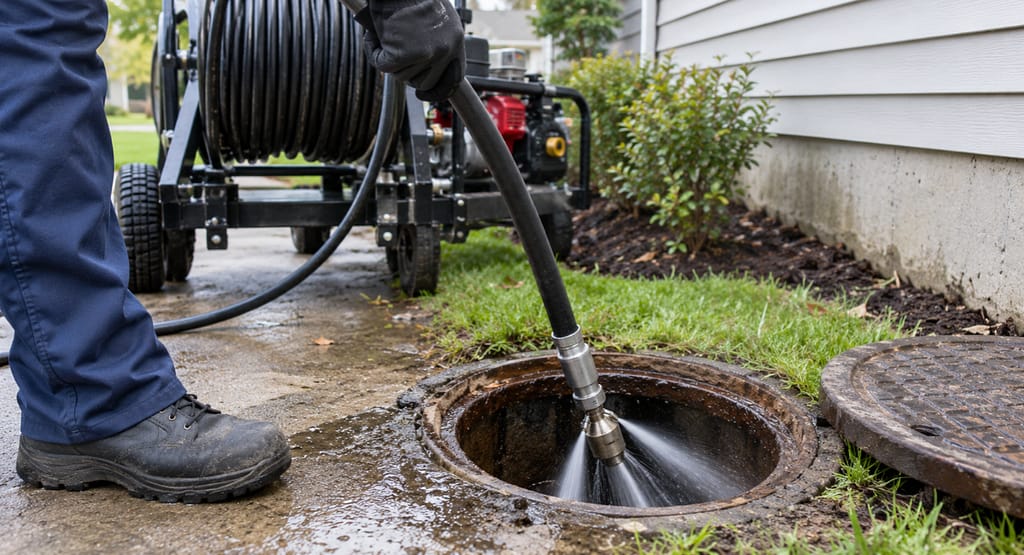
Your specialist will likely pick one of three methods, sometimes two in a row.
| Method | How it works | Best for | Watch out for |
| Snaking (augering) | A flexible metal cable breaks up or pulls out the clog | Clogs close to a fixture, hair, small objects | May leave grease on pipe walls, so clogs can return |
| Hydro jetting | High-pressure water scrubs the inside of the pipe | Grease, sludge, roots, repeat clogs | Must be done by a professional; old or fragile pipes need checking first |
| Camera inspection | A small camera shows the inside of the pipe | Finding the real cause of repeat clogs | Adds cost, but shows what is actually wrong |
Snaking is the older, simpler method. Plumbers often snake a line first, then recommend hydro jetting if buildup remains. hometips
Hydro jetting does more than open a small path through the clog. Roto-Rooter describes it as using water at roughly 3,000 to 4,000 PSI to remove debris and grease from the inner pipe walls. PSI means pounds per square inch, a measure of water pressure. rotorooterca
Pipe age matters. Older or fragile pipes should be inspected before hydro jetting to avoid damage. A careful specialist will look first, then choose the method. If one pushes jetting without checking your pipes, that is a warning sign. hometips
A camera is also useful before you pay to clear the same drain a third time. It can show whether the cause is grease, roots or a damaged section.
Should You Try DIY First?
For a single sink or tub, yes, it is reasonable to try first. A plunger, cleaning the P-trap (the curved pipe under the sink) and a hand snake solve many simple clogs.
Chemical drain cleaners are where people get into trouble:
- They rely on caustic ingredients such as lye or sulfuric acid, and the reaction produces intense heat inside the pipe. straightshooterplumbing
- On older metal pipes they can speed up corrosion, and the heat can soften or warp PVC over time. benjaminfranklinplumbing
- They often only punch a small hole through the clog instead of removing it.
- Mixing cleaners, or cleaner with bleach, can release toxic gases. summersphc
If you already used a chemical cleaner, tell the specialist before they start. It protects them from splashes, and it helps them choose the right tool.
Stop DIY and call someone if you notice water backing up into other fixtures or several drains clogging together. braindetox
How Much Does a Drain Cleaning Specialist Cost?
Prices vary a lot by country, city and clog type, and the sources I read do not agree with each other. Treat these as rough US ranges, not quotes.
- Basic snaking of a sink or tub: one cost guide puts it at about $150 to $350, with hydro jetting at $400 to $900. alwaysdobetterllc
- Another guide puts the average cost of unclogging a drain at $385, with a typical range of $175 to $600, and video line inspections at about $125 to $500. inchcalculator
- Main sewer line work usually costs more than a single fixture, and emergency calls cost more than booked visits.
What moves the price:
- Where the clog is (fixture or main line)
- How easy it is to reach (a cleanout access point makes it cheaper)
- How severe the blockage is
- Whether a camera is included
- Time of day (night and weekend calls cost more)
Ask for a written quote. If a camera inspection is included, ask for it as a separate line so you can see what you are paying for.
How to Choose a Drain Cleaning Specialist
Use this checklist before you book:
- Check licensing and insurance. Rules differ by state and country, so check what your local authority requires, then ask to see proof.
- Ask which method they plan to use and why. A good answer mentions your pipe type, age and the clog location.
- Ask about a camera. Specialists who diagnose first tend to fix the right problem.
- Get a price before work starts, including call-out fees and any extra charges.
- Read recent reviews and look for details such as clear explanations and whether the clog stayed away.
- Ask what happens if it returns. Some companies offer a short guarantee on the work.
- Be careful with “too cheap” offers. A very low quote can turn into extra charges once they arrive.
What to Expect on the Day
First, the specialist asks what you have noticed and where. Then they inspect, usually from the cleanout or the nearest drain. They clear the blockage, run water to test flow, and may use a camera to confirm the pipe is clear. Before they leave, they should tell you the cause and what to do next.
Clear the area around the drain beforehand and know where your main cleanout is, if you have one. It can save time on the job.
How to Keep Drains Clear After the Visit
- Do not pour cooking grease down the sink. Let it cool, then put it in the bin.
- Fit drain screens on tubs and showers to catch hair.
- Flush only toilet paper.
- Deal with slow drains early, before they become full blockages.
- If a drain clogs repeatedly, ask for a camera check instead of paying for the same quick fix again and again.
Frequently Asked Questions
Is a drain cleaning specialist the same as a plumber?
Not exactly. Many plumbers clear drains, but a drain specialist focuses on drain and sewer lines and usually carries cameras and jetting equipment. For pipe repairs you may still need a plumber.
How often should drains be professionally cleaned?
There is no single rule. If you have no problems, you may never need it. If you have repeated slow drains, grease-heavy cooking or older pipes, ask a specialist how often a check makes sense for your home.
Is hydro jetting safe for old pipes?
It depends on the pipe’s condition, not only its age. Ask for a camera inspection first. Very fragile or damaged pipes may need a gentler method.
Can I use a chemical drain cleaner before calling someone?
You can for a minor sink clog, but it is risky for older pipes and unsafe to mix with other products. Do not use it if several drains are backing up.
What if several drains back up at once?
That usually points to the main line. Stop using water where you can and call a specialist. Do not keep pouring cleaner in.
Do I need a camera inspection?
Not for every clog. It is worth it when the same drain keeps blocking, or when you want to see the real cause before paying for more work.
The Short Version
One slow sink is usually a DIY job. Several slow drains, a sewage smell, or a clog that keeps coming back means it is time for a drain cleaning specialist. Ask what method they will use, get the price in writing, and prefer someone who looks inside the pipe before they decide.
Safety note: sewage backups can carry bacteria. Keep children and pets away from affected areas, and call a professional instead of trying to clear a main line yourself.
About the Author