If your outdoor faucet has no shut off valve inside the house, you cannot drain the pipe the usual way. The safest plan is to remove the hose, insulate the faucet and the pipe behind it, watch the weather, and add a shut off valve or a frost-free faucet before next winter.
This guide explains how to winterize outdoor faucet without shut off valve, step by step. It also tells you where each method falls short, so you know what to expect.
Why a missing valve makes this harder
The normal method is simple. You close a valve inside the house, open the faucet outside, and let the pipe empty. Draining the pipe between the valve and the faucet stops water from sitting there, freezing, and breaking the pipe. aol
Without a valve, the pipe stays full of water. So you are not removing the water. You are only trying to keep it warm enough. That works for many homes, but it is weaker protection, and it needs more attention on cold nights.
The risk is real. The American Red Cross lists outdoor hose bibs among the pipes that freeze most often. A hose bib is the faucet where you connect a garden hose. boston25news
First, check that you really have no valve
Many people think they have no valve because they never looked in the right place. Check these spots:
- The basement ceiling or crawl space near the wall where the faucet sits
- Near the main water valve, where newer homes often put labeled valves
- Around the water heater
In older homes the valve is often near the ceiling close to the outside faucet, and in newer homes it is usually next to the main valve. Look for a small cap on the valve. That is a drain cap, and it helps you empty the pipe. structuretech
Also check the faucet itself. A frost-free faucet has a long stem and closes the water well inside the wall. If yours is long and slopes slightly down toward the outside, you may not need the steps below. Hose removal still matters. structuretech
If you still can’t find a valve, a plumber can locate one or fit a new one.
What you need
- Foam faucet cover (rigid shell type) or a thick towel, a plastic bag, and weatherproof tape
- Pre-slit foam pipe insulation for any exposed pipe
- Caulk or foam sealant for gaps where the pipe enters the wall
- Heat tape or heat cable made for the job (optional, for very cold areas)
Steps to winterize an outdoor faucet without a shut off valve
1. Remove and drain the hose
Take off every hose, splitter and timer. A hose left attached traps water and invites trouble. Drain it fully and store it in a shed or garage. structuretech
2. Fix any drip or leak
A small leak at the faucet keeps feeding water into a place that will get very cold. Replacing a worn O-ring fixes many leaks, and a plumber is needed if that does not work. Do this before the first freeze. gardeningetc
3. Drain the vacuum breaker if you have one
Some faucets have a small cap on top called a vacuum breaker (it stops dirty water flowing backward). It can trap enough water to break even after the faucet looks empty. A home inspector explains two fixes: take it off for winter, or push the small white post inside, or pull down the black ring, so the last water drains out. structuretech
4. Keep the faucet handle closed
When there is a valve, you leave the faucet open to drain. Without one, an open faucet would simply run. Close the handle firmly.
5. Insulate the faucet
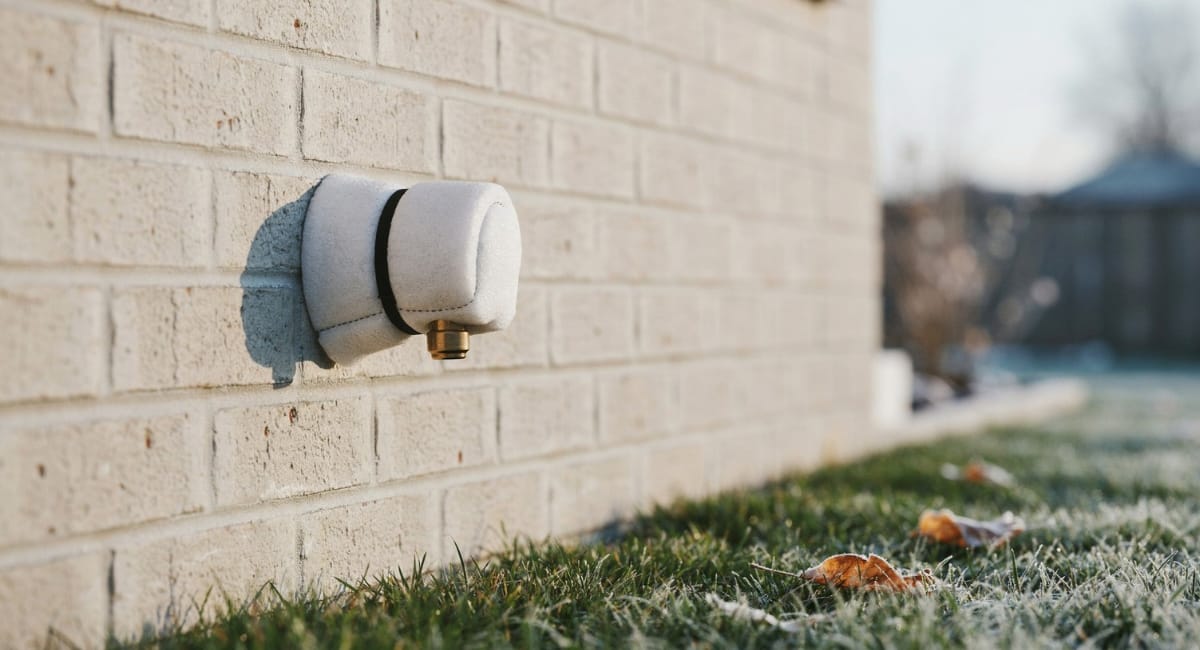
Use a rigid foam cover or a snug sock-style cover. Whatever you use, it should cover the whole faucet and block small air gaps so wind cannot touch the metal. In a pinch, wrap a towel around the faucet, cover it with a plastic bag, and tie it down with weatherproof tape. aolhunker
Be honest with yourself about covers. One home inspector calls them only a little better than nothing. They slow the cold down. They do not stop a long, hard freeze. structuretech
6. Insulate the pipe behind the faucet
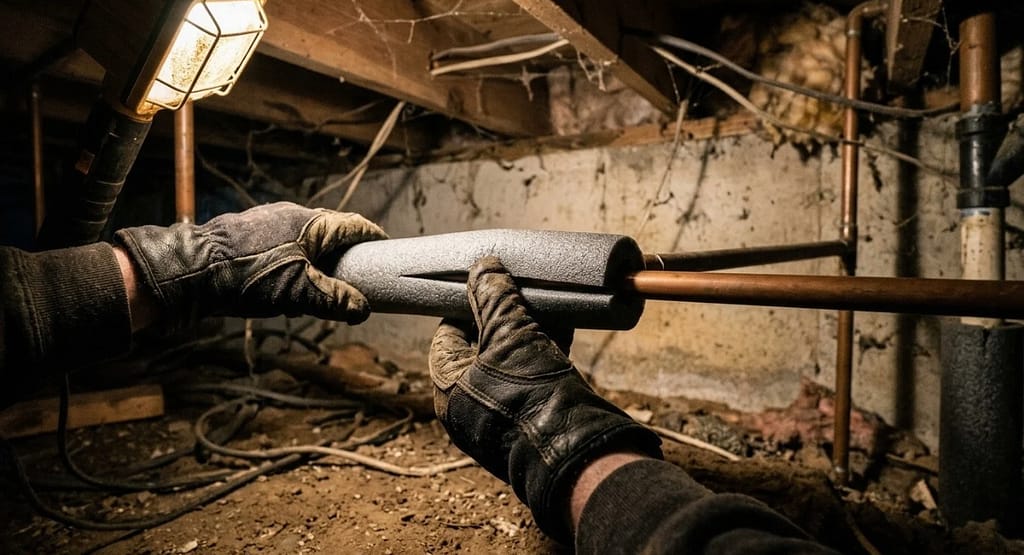
If the pipe runs through an unheated crawl space or garage, wrap it with foam pipe sleeves. Leave pipes in warm, heated rooms alone, because they already get warmth from the house. Then caulk around pipes where they enter the house and seal cracks in outside walls. oakharbor
7. Add heat tape only if the cold is severe
Heat tape is an electric wrap that makes a small amount of heat. The Red Cross suggests UL-listed heat tape or cable. Choose one made for your use (indoor or outdoor) and follow the maker’s instructions. Keep water, cords and outlets apart. wkrn
When does an outdoor faucet freeze?
Water freezes at 32°F (0°C), but pipes in real homes need a bit more cold. Consumer Reports says frozen pipes usually happen below 20°F, though it can happen above that. Length of the cold matters too. One short dip is less risky than a full night below freezing. boston25news
A faucet on a cold, windy wall with no insulation is at the highest risk. That is where your cover and sealing work matter most.
Should you let the faucet drip?
Dripping is a short-term emergency step, not a winter plan. Advice varies:
- One home-improvement site says to drip only when it falls below 28°F. gardeningetc
- One city utility suggests about five drops a minute in sub-freezing weather. oakharbor
- A plumbing company warns that in very deep cold, dripping can form icicles, slick patches, or ice at the opening. mrrooter
- Some cities ask people not to run taps, since it can lower water pressure. homegnome
Check your local water company’s advice first.
Can you just shut off the main water?
You can, as a last resort. The water company or you can turn off the water at the street long enough to drain the spigot. There are two catches. The whole house has no water while it is off. And the pipe refills the moment you turn it back on. So this works for a planned trip or an emergency, not for a whole winter. homegnome
The real fix: add a valve or a frost-free faucet
A shut off valve is the best long-term answer. Builders recommend an indoor shut off valve for each outdoor faucet so you can cut the supply and drain the line before the freeze. A plumber can install it, and if the old valve is a gate type, a ball valve is more reliable. A ball valve has a lever. A quarter turn closes it. homesandgardensaol
A frost-free faucet is the second option. It has a longer body and sits at a downward angle so water drains out. One source puts faucet covers at about $7 and frost-free faucets at about $50 before labor. Installation means opening the wall, so most homeowners hire a plumber. After it is fitted, keep the hose off in winter. A hose can stop it draining. homegnomehomegnome
Mistakes to avoid
- Leaving the hose on. It traps water at the faucet.
- Trusting an old house that “never froze.” Some older homes lose so much heat at the wall that faucets stay warm, but the inspector calls this unreliable. Do not copy it. structuretech
- Putting antifreeze in the spigot. Angi advises against it. angi
- Thawing with a flame or heat gun. A heat gun can blister paint, melt siding, and start paper burning. structuretech
- Waiting for the first freeze. Do the work in fall, on a dry day.
What if the faucet already froze?
Open the faucet first so melting water has somewhere to go. Then warm the pipe slowly with towels soaked in hot water. A hair dryer works but takes a long time. If water leaks inside the wall or the pipe has cracked, turn off the main water straight away and call a plumber. boston25newsstructuretech
FAQs
Can I winterize an outdoor faucet without a shut off valve?
Yes, but only partly. You can remove the hose, insulate the faucet and pipe, and watch the weather. You cannot drain the line, so the protection is not complete. Adding a valve is the better fix.
Should the faucet be open or closed if there is no valve?
Closed. With no valve to cut the supply, an open faucet would just keep running. Some guides say to leave it open, but that advice assumes a valve inside the house.
Do foam faucet covers work?
They help on mild and moderate cold nights. They do not heat anything. In long, severe cold they are not enough alone, so add pipe insulation or fix the valve problem.
When should I cover my outdoor faucet?
One plumber says to cover it whenever freezing temperatures are expected, and another says to do it as soon as you finish using it in fall. Do not wait for the first freeze. aol
Is a frost-free faucet safe without a valve?
Usually yes, if it is fitted with the correct slope and the hose is off. If it is not sloped, water can sit inside and freeze. structuretech
The key takeaway
Without a shut off valve, you are protecting the water, not removing it. Take the hose off, insulate well, and treat very cold nights with care. Then put a valve or a frost-free faucet on your list before next winter.
About the Author