Introduction
Managing social media for a business is rarely a one-person job anymore. Between writing posts, designing graphics, scheduling content, and tracking results, the workload spreads across multiple people. When teams try to handle this through email threads, chat apps, and shared documents, things slip through the cracks. Posts go out with typos. Two people publish at the same time. Client approvals take days.
This is exactly why team collaboration tools exist inside social media platforms. Crew CloudySocial Com is one such feature set designed to bring order to that chaos. If you are wondering what it actually does, who it is for, and whether it is worth your time, this guide breaks it down in plain language.
TL;DR:
Crew CloudySocial Com is the team collaboration layer inside the CloudySocial platform. It lets you assign roles, share content calendars, set up approval workflows, and leave feedback on posts before they go live. It is built for small-to-mid-sized teams who need structure without enterprise-level complexity.
What Exactly Is Crew CloudySocial Com?
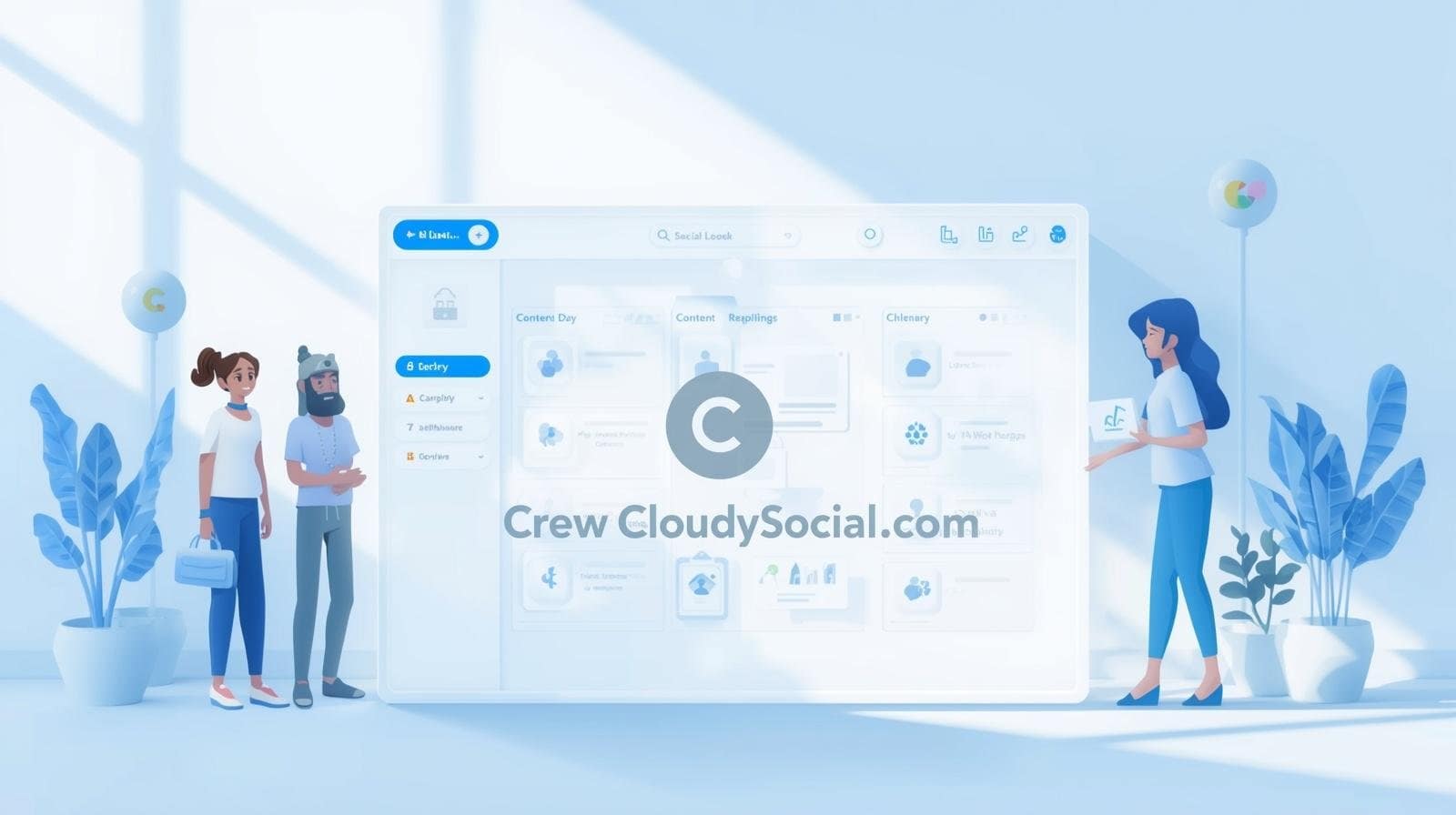
Crew CloudySocial Com refers to the team management section of the CloudySocial platform. It is a cloud-based workspace where multiple people can collaborate on social media content from one dashboard.
Think of it as a shared control room. Instead of one person holding all the passwords and making all the decisions, the crew feature spreads the work across a team. One person drafts a post. Another reviews it. A manager approves it. Then it gets scheduled. Everyone sees the same calendar, the same drafts, and the same feedback. Nothing hides in a private inbox.
CloudySocial itself handles the basics: scheduling posts, tracking analytics, and managing multiple social accounts. The crew layer adds the human coordination on top of that. It is not a separate product. It is part of the same platform, activated when you add team members to your account.
Who Should Use It?
Not every team needs a collaboration layer. If you are a solo creator handling one Instagram account, this is overkill. But for teams where more than one person touches the content before it goes live, it starts to make sense.
Good fit:
- Small marketing agencies managing several client accounts
- In-house social teams with 3 to 8 members
- Freelancers who need client approval before publishing
- Startups building a brand presence with a lean team
- Nonprofits where volunteers manage different platforms
Less ideal:
- Solo operators who do everything alone
- Large enterprises that need deep CRM links and advanced reporting
- Teams already happy with tools like Sprout Social or Hootsuite
Here is a realistic example. A digital marketing agency in Austin, Texas, has five employees. Two write content, one designs graphics, one handles client communication, and the owner reviews everything before it goes live. Using the crew features, each person logs in with their own role. The writers see their drafts. The owner gets notified when something needs approval. The client can review posts inside the platform instead of through email. That is the sweet spot for this tool.
Key Features That Matter
Let us look at the main features and what they actually do in daily use.
Role-Based Access
You can assign roles like Admin, Editor, Contributor, or Viewer. Each role carries different permissions. A contributor can write a draft but cannot hit publish. An editor can schedule and publish. An admin controls billing, adds users, and manages account settings.
This prevents accidents. It also creates accountability. If a post goes live at the wrong time, the activity log shows who scheduled it.
Content Approval Workflows
Before any post goes live, it can move through an approval chain. The writer creates a draft. The editor checks it. The manager gives final approval. Only then does it get scheduled.
For agencies, this is useful because clients often want to see content before it publishes. Instead of sending screenshots back and forth, the client logs in, reviews the post, and clicks approve. This alone can save hours every week.
Shared Content Calendar
Every team member sees the same calendar. You can filter by platform, by team member, or by status such as draft, pending, scheduled, or published.
This removes the classic confusion of “I did not know that was going out today.” Everyone sees the plan. Everyone knows what is next.
In-Platform Communication
Team members can leave comments directly on individual posts. This keeps feedback tied to the content it relates to, rather than scattered across Slack channels or email threads.
If a graphic needs a color change, the comment sits right on that post. The designer sees it, fixes it, and marks it done. No separate messages needed.
Activity Logs
Every action is recorded. Who created a post, who edited it, who approved it, and when it was published. This is not about watching employees. It is about clarity. When something goes wrong, you do not have to guess what happened.
How It Compares to Other Tools
There is no shortage of social media management platforms. Here is how CloudySocial’s crew features stack up against common alternatives.
| Feature | Crew CloudySocial Com | Hootsuite | Sprout Social | Buffer |
|---|---|---|---|---|
| Role-based access | Yes | Yes | Yes | Limited |
| Approval workflows | Yes | Yes | Yes | No |
| Shared calendar | Yes | Yes | Yes | Yes |
| In-post comments | Yes | Yes | Yes | No |
| Advanced analytics | Basic | Strong | Very strong | Basic |
| Pricing | Lower | Mid-range | Higher | Lower |
| Learning curve | Gentle | Moderate | Steeper | Gentle |
CloudySocial will not beat Sprout Social on deep data analysis. It does not try to. Its strength is offering solid team features without the steep price or the steep learning curve. If your main problem is workflow and coordination, not deep analytics, the trade-off is reasonable.
Honest Pros and Cons
No tool is perfect. Here is a balanced view based on how teams actually use these platforms.
Pros:
- The interface is clean and easy to learn. New team members get comfortable quickly.
- Team features do not require jumping to the most expensive plan.
- Approval workflows reduce publishing errors and speed up client sign-offs.
- It works well for agencies juggling multiple client accounts.
- The setup time is short. A small team can be up and running in one afternoon.
Cons:
- Analytics are basic compared to enterprise tools. If you need deep audience insights, you may outgrow it.
- The user community is smaller, so there are fewer third-party tutorials and templates.
- Platform integrations may not cover every social network. Check their current list before signing up.
- As a newer platform, long-term stability is still being proven.
- Customer support options may be more limited than those of established competitors.
Getting Started: A Simple Setup
If you decide to try it, here is a straightforward way to get started without wasting time.
- Create your account on the main CloudySocial website.
- Navigate to the Crew or Team section from your dashboard.
- Invite team members by email. They will get a link to join.
- Assign roles based on what each person actually does. Start simple. You can always add complexity later.
- Set up your approval workflow. Decide who reviews and who has final say.
- Build your shared content calendar. Add the next two weeks of planned posts so everyone sees the rhythm.
- Set communication norms. Agree that feedback on posts stays inside the platform, not in email.
The whole process should take a few hours, not days. The key is setting clear roles from the start rather than figuring it out as you go.
Tips for Getting the Most Out of It
Based on how teams typically use collaboration tools, here are practical habits that make a difference.
Start with three roles. Admin, Editor, Contributor. That covers most small teams. Add more roles only when you clearly need them.
Use the approval workflow even if your team is tiny. It catches typos, off-brand messaging, and scheduling conflicts before they become public mistakes.
Review the calendar together once a week. A 15-minute Monday check-in saves hours of confusion later. Everyone sees the week ahead and can flag issues early.
Keep feedback attached to posts. Use in-post comments instead of Slack or email for content reviews. When feedback lives next to the content, nothing gets lost.
Audit permissions quarterly. When team members leave or change roles, update their access immediately. This is a simple security habit that many teams skip.
Frequently Asked Questions
What is Crew CloudySocial Com used for?
It is used for team-based social media management. The crew feature lets multiple people collaborate on content creation, scheduling, and publishing with defined roles and approval workflows. It brings structure to social media operations for small and mid-sized teams handling multiple accounts.
Teams use it to replace messy email chains and scattered documents with one shared workspace where everyone knows their role.
Is CloudySocial free to use?
CloudySocial offers different pricing tiers. Some basic scheduling features may be available at no cost, but team collaboration tools like role management and approval workflows usually require a paid plan. The pricing tends to sit below enterprise tools like Sprout Social, making it accessible for smaller teams and agencies on tighter budgets.
If you are unsure, start with a trial to test the crew features before committing to a paid plan.
How does CloudySocial compare to Hootsuite?
CloudySocial is generally simpler and more affordable, while Hootsuite offers deeper integrations and a larger feature set. For small teams focused on collaboration and content workflows, CloudySocial can be a strong fit. Hootsuite may work better for mid-to-large teams that need advanced analytics, extensive app integrations, and a more established support system.
The choice depends on whether your bigger need is smooth teamwork or deep data analysis.
Can I use CloudySocial for client work?
Yes, it is well-suited for agencies. The role-based access system lets you invite clients as reviewers or approvers without giving them full control over the account. This replaces long email threads with a centralized place where clients can see, comment on, and approve content before it goes live.
Many small agencies find this speeds up client sign-offs by a day or two per campaign.
Is my data safe on CloudySocial?
Like most cloud-based platforms, CloudySocial uses standard security practices such as encryption and secure login. However, as a newer platform, it may not yet carry the same compliance certifications, like SOC 2, that larger competitors hold. If your organization has strict data security requirements, review their current security documentation before making a long-term commitment.
For most small teams and agencies, standard encryption is sufficient. Enterprises with heavy compliance needs should verify first.
Does CloudySocial support all social media platforms?
It supports major platforms including Facebook, Instagram, Twitter or X, and LinkedIn. Support for newer or niche platforms like TikTok, Pinterest, or Threads may vary. Before signing up, check their current integrations page to confirm the platforms your team uses are covered.
If your strategy relies heavily on a platform not yet supported, you may need to handle that channel separately.
Note:
Technology and platform features change quickly. We recommend reviewing this article every 6 to 12 months to ensure feature descriptions, pricing, and platform support remain accurate and useful for readers.
About the Author